
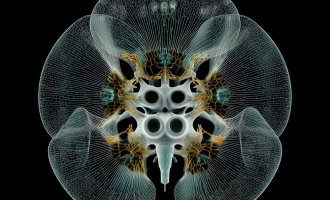
(RE)NEW
"Because every human being, by virtue of being born, is an initium, a beginning and a newcomer to the world, people can take initiative and set new things in motion."
[after Hannah Arendt: Vita Activa or On Active Living [1958], Munich/Zurich 1981, p. 166f.]
What kind of times are we living in? Are the present and recent past among the worst periods in human history?
That's the impression one might get from the news, commentary, social media posts, etc. about current events: wars, violent conflicts, climate change, environmental disasters, social injustice, housing shortages, poverty—experts speak of a polycrisis. But is our perception accurate when we look at developments worldwide?
Have there been “better times” from a global perspective? Or are they still ahead of us?
How do we measure the state of a global society?
Many global indicators (child mortality, life expectancy, health, per capita income, education, etc.) have shown significant improvement in recent decades. But most people see things differently. Where does the ‘instinct for negativity’, which is reinforced by media coverage focusing on negative events, come from, and where can feelings such as fear and uncertainty even lead to wrong social and political decisions?
When neoliberalism and, with it, globalization took hold in our increasingly economically dominated world, there was talk of a “new complexity” (Habermas) and the critical slogan of the hour was “Bringing the State Back In” (Skocpol/Rueschemeyer). When, during the financial crisis and the coronavirus pandemic, “the state with its control functions” (Menzel) and numerous economists were already proclaiming the renaissance of Keynesianism, not only were considerable forms of administrative incompetence apparent, but also striking losses of freedom, which apparently occur as soon as many citizens give in to the ‘authoritarian temptation’ with too much enthusiasm.
Today, a new mood and neologism are making the rounds. It expresses the hope that the undeniable crisis processes currently underway on an ecological, economic, political, and cultural level (norms and values) can be made to vanish into thin air through the forced use of “smart” digital technologies: “Polis of the Solution” is the new magic formula. People are placing their faith in the world-improving entrepreneurs from Silicon Valley and believe that a small group of white men (Thiel, Musk, Karp, Page, Arnault, etc.), who are shaking up the market and bureaucracy with their disruptive methods, can save the planet and humanity.
But the price for this trust in “big tech” and its self-obsessed protagonists is high. ‘Classic’ colonialism, which only partially disappeared even after the founding of the so-called “new states” in developing countries, is being replaced by “digital colonialism” (Dachwitz/Hilbig). For example, the “data economy” is firmly in the hands of corporations from the global North. And this also applies to the raw materials without which digital progress would not be possible. Although the important mining areas for cobalt and lithium are located in the global South, the profits are not generated where the resources are found. And the goals and purposes for which these valuable resources are used are not determined by those who perform the exhausting and risky work.
Those who recognize this no longer believe in the promise once associated with the advent of digital technology that its establishment would lead to the emergence of a post-capitalist economy in which profit interests and growth pressures would no longer dominate. Many people are also growing skeptical that the “digital revolution” and the artificial intelligence it has unleashed will be used for the benefit of all and remain democratically controllable.
The current situation is therefore characterized by two trends: on the one hand, confidence in authoritarian leaders who ally themselves with the CEOs of large tech companies is growing; on the other hand, awareness of the destructive forces of such an alliance is also growing.
This growing awareness of danger manifests itself in two ways: on the one hand, there is the fear that the window of opportunity for finding meaningful solutions to the problems is closing; on the other, there is an unbroken determination to stop the countdown that has been set in motion, coupled with the confidence that there are enough competent and courageous actors to bring about the necessary change.
What can we expect or even demand from aesthetic projects and works in this situation? We need art that is not only in tune with the times, designing concepts and creating works that reflect the spirit of the age, but also possesses a keen historical awareness—an understanding of the current situation and the historical processes that led to it—because the key concepts we use to access the fundamental problems of the present have changed dramatically in recent decades.
Art is known to have numerous capabilities and purposes: to name just the most striking and perhaps most important, it can shock and stir, encourage and activate, soothe and comfort, distract and gloss over, mislead and blind. Today, more than ever, it faces the decision of what function it wants to have and what materials, styles, formats, and genres it should choose in order to fulfill its self-imposed task (which may also include the complete rejection of functionality). At the same time, it must always take into account that its intentions may be misunderstood by recipients, experts, critics, etc., and not infrequently even turned against it for ideological purposes. This situation requires artists and the institutions that promote and evaluate them to reflect more deeply on the social, economic, and ecological conditions under which artistic practice can and perhaps even wants to become a relevant event. The current significance and effectiveness of art are not sufficiently recognized when art primarily observes itself (with the help of art historians and critics, among others) and is intensively preoccupied with its own crisis-ridden modernity.
There is no doubt that the expectations of recipients/audiences toward art have changed significantly in recent years. This process has been dramatized, with talk of “art after the end of its autonomy” and interpretations of the supposedly ‘new’ approach to aesthetic phenomena as an expression of the desire for “identification and empowerment.” “Instead of allowing oneself to be challenged by the unfamiliar or at least the alienating, one pays [...] increasing attention to connections and similarities; one seeks solidarity, participation, and communities, desires encouragement and support” (Wolfgang Ullrich).
Creative, indulgent, affirmative criticism, i.e., criticism that is based on agreement with what one wants to produce and is not exclusively negative in relation to what one rejects, can, as Bruno Latour put it, be associated with “more rather than less,” “with multiplication rather than subtraction,” in order to “generate more ideas.”
Art makes a significant contribution to responding to the (perceived) threat with ‘ambivalence tolerance’: i.e., with the resilient ability to seismographically perceive diffuse uncertainties and threats of a time, to absorb them analytically, and to transform them creatively—not least in order to remain emotionally capable of action and productive in the end.
Media artists are pioneers when it comes to dealing critically and reflectively with artificial intelligence, for example, or searching for fair and ethically responsible practices, such as the right not to be controllable or codable. Many works therefore invite viewers to become creative co-creators, to question and redefine their role in the complex network.